
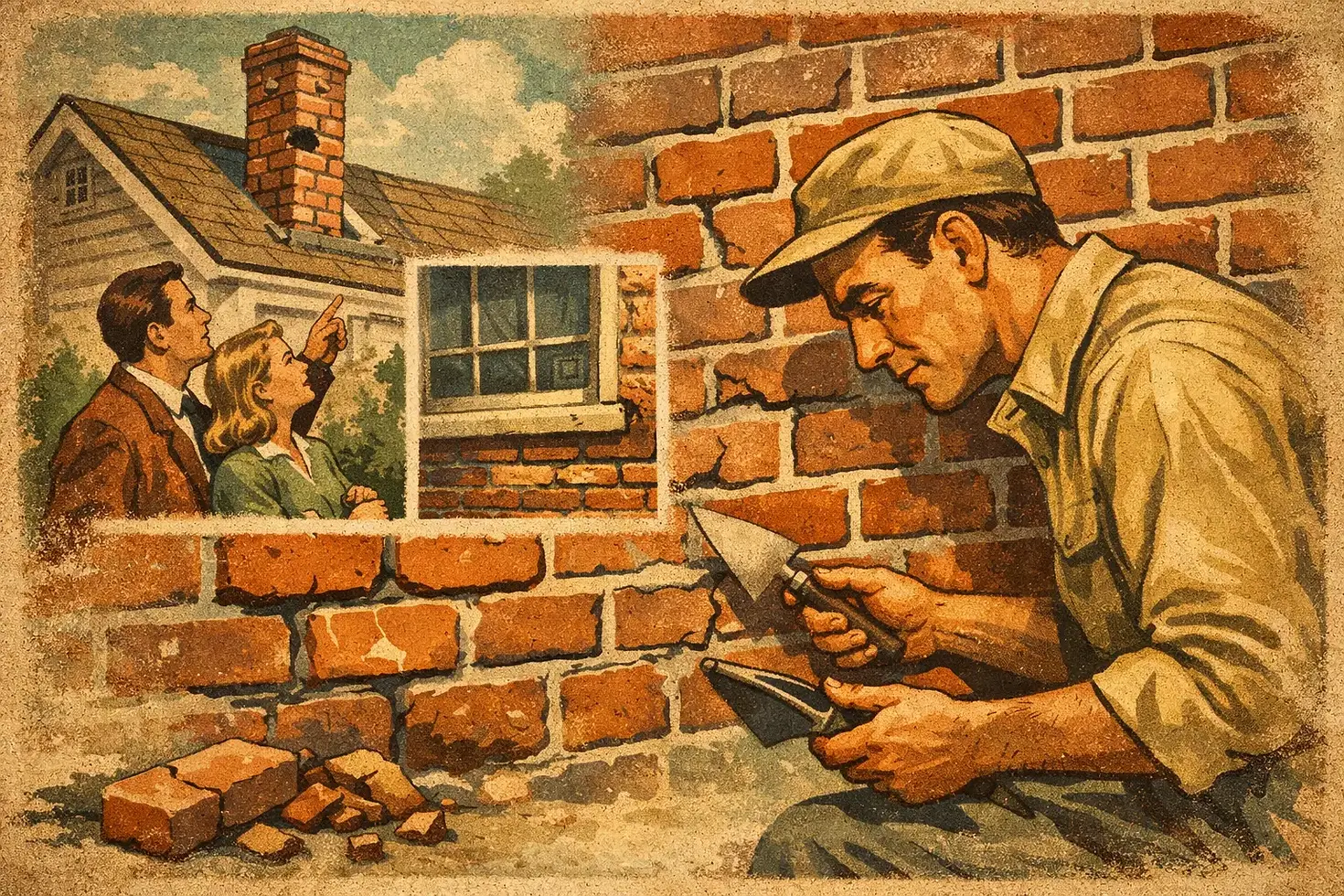
How Do You Know If You Need Tuckpointing?
A brick wall can look solid from the street and still be starting to fail at the joints. That is usually where the trouble begins. If you are wondering how do you know if you need tuckpointing, the answer often comes down to the condition of the mortar, not the brick itself.
In the Northwest Suburbs of Chicago, mortar takes a beating. Rain, snow, humidity, and repeated freeze-thaw cycles slowly wear it down. Once that mortar starts to crack, recede, or separate, water gets deeper into the masonry. That is when a cosmetic issue can turn into a repair problem.
How do you know if you need tuckpointing on your home?
The most obvious sign is mortar that looks worn out compared to the surrounding brick. Healthy mortar joints should look compact, consistent, and tightly bonded. If the lines between the bricks are crumbling, pitted, or missing in spots, the wall is no longer as protected as it should be.
You may also notice that the mortar has receded back from the face of the brick. That setback creates small ledges where water can sit. In Illinois weather, trapped moisture is a problem. When temperatures drop, that moisture expands and puts more pressure on the masonry.
Another common sign is loose material at the base of a wall or below a chimney. If you are finding sandy debris or small pieces of mortar on the ground, that usually means the joints are breaking down. Mortar does not repair itself, and the longer it is left alone, the more exposed the structure becomes.
The clearest signs your mortar joints are failing
Cracks in mortar joints are one of the first things homeowners notice. Hairline cracking is not always an emergency, but it should not be ignored either. The pattern matters. A few isolated surface cracks may point to age and weathering. Widespread cracking, stair-step cracking, or cracks that run near windows, corners, or chimneys can suggest more advanced deterioration.
Gaps between the brick and mortar are another red flag. Mortar is meant to lock the masonry system together and help keep water out. When it begins separating from the brick, that bond is compromised.
You may also see white staining on the masonry surface. That chalky residue, called efflorescence, appears when water moves through brick and mortar and leaves mineral deposits behind. Efflorescence does not always mean you need tuckpointing immediately, but it does mean moisture is traveling where it should not. If it appears alongside crumbling joints, the need for repair becomes more likely.
Inside the home, signs can show up as dampness near a chimney chase, water stains on walls near exterior brick, or musty odors after heavy rain. Those symptoms do not always trace back to mortar failure alone, but damaged joints are a common contributor.
Chimneys often show tuckpointing needs first
Chimneys tend to deteriorate faster than walls because they are fully exposed on all sides. They take direct weather, wider temperature swings, and years of moisture penetration. For many homeowners, the chimney is the first place where failing mortar becomes visible.
Look for joints that appear washed out, cracked, or open. Pay attention to bricks that seem loose or slightly shifted. If the mortar crown, flashing, or nearby joints are deteriorating at the same time, the chimney can become vulnerable quickly.
This is also where repair timing matters. Waiting too long can move the job from tuckpointing into partial rebuilding or structural brick replacement. That is a much bigger repair and a much bigger cost. Catching chimney mortar issues early is one of the best ways to protect both the structure and the fireplace system below it.
When it is tuckpointing and when it is something more
Not every masonry problem is solved with tuckpointing alone. That is an important distinction. Tuckpointing is the right repair when the bricks are still in good shape but the mortar joints have deteriorated.
If the bricks themselves are cracked, flaking, spalling, or loose, additional masonry repair may be needed. In some cases, water damage has been going on long enough that replacing damaged brick is just as important as restoring the joints around it. On older chimneys or heavily weathered walls, sections may need rebuilding rather than surface-level joint work.
That is why a close inspection matters. A proper assessment should look at depth of mortar loss, moisture exposure, brick condition, and whether the issue is localized or widespread. Good masonry repair is not just about filling gaps. It is about restoring the wall or chimney so it performs the way it should.
How long can you wait?
It depends on the severity of the deterioration and where it is happening. Minor mortar wear on a sheltered wall may not require immediate work, but it should be monitored. Open joints on a chimney or on a wind-driven side of the home should move much higher on your priority list.
The risk in waiting is usually water. Once water starts entering weakened joints, the repair area can grow from season to season. What starts as a few failing sections can spread as freezing weather expands the damage. That is one reason tuckpointing is often more cost-effective when done early.
Homeowners sometimes put off masonry repairs because the wall still looks mostly intact. That is understandable. Brick is durable, and problems can develop slowly. But mortar is the sacrificial part of the system. It is designed to wear before the brick does. When it has worn too far, the brick starts taking the damage next.
Why Illinois weather makes tuckpointing more urgent
In the Arlington Heights area and throughout the Northwest Suburbs, masonry does not get a gentle climate. Seasonal swings put real stress on mortar joints. Winter freezing, spring rain, summer heat, and fall moisture all work against exposed masonry.
That means repairs need to be done with the local environment in mind. Mortar selection, joint preparation, and color matching are all important, but durability matters just as much. A repair that ignores climate conditions may look better at first and fail sooner than it should.
This is also why patching over bad mortar is not the same as proper tuckpointing. If deteriorated material is not removed to the right depth and replaced with compatible mortar, the repair may not last. Precision matters, both for appearance and for long-term performance.
How do you know if you need tuckpointing or just maintenance?
A simple rule is this: maintenance addresses buildup, minor sealing concerns, or routine inspection needs. Tuckpointing addresses mortar loss and joint failure. If the mortar is still sound, you may only need observation and routine upkeep. If it is cracking, falling out, or pulling away from the brick, you are beyond maintenance.
For chimneys, this question often overlaps with fireplace and venting safety. Mortar deterioration near the chimney exterior can exist alongside flue issues, crown damage, or flashing leaks. That is why many homeowners prefer a specialist who understands both masonry restoration and chimney performance. The goal is not just to improve the look of the brick. It is to protect the structure and the safety of the system as a whole.
At Liberty Fireplace & Masonry, that is the standard we believe homeowners should expect - careful evaluation, repair methods suited to local weather, and workmanship built to last.
What to do if you see the signs
Start with a professional inspection before the damage spreads. A trained masonry specialist can tell you whether the issue is isolated, whether the bricks have also been affected, and how urgent the repair really is. That helps you avoid both overreacting to harmless wear and underestimating a developing problem.
If repairs are needed, ask about mortar matching, repair depth, and how the work is designed to handle freeze-thaw conditions. Those details affect the finished look of the home, but they also affect how well the repair performs over time.
Brick homes and chimneys are built to last, but they last best when the mortar joints are not ignored. If your masonry is showing cracks, gaps, crumbling joints, or signs of water movement, it is worth having it looked at now while the repair is still straightforward.


Comments