
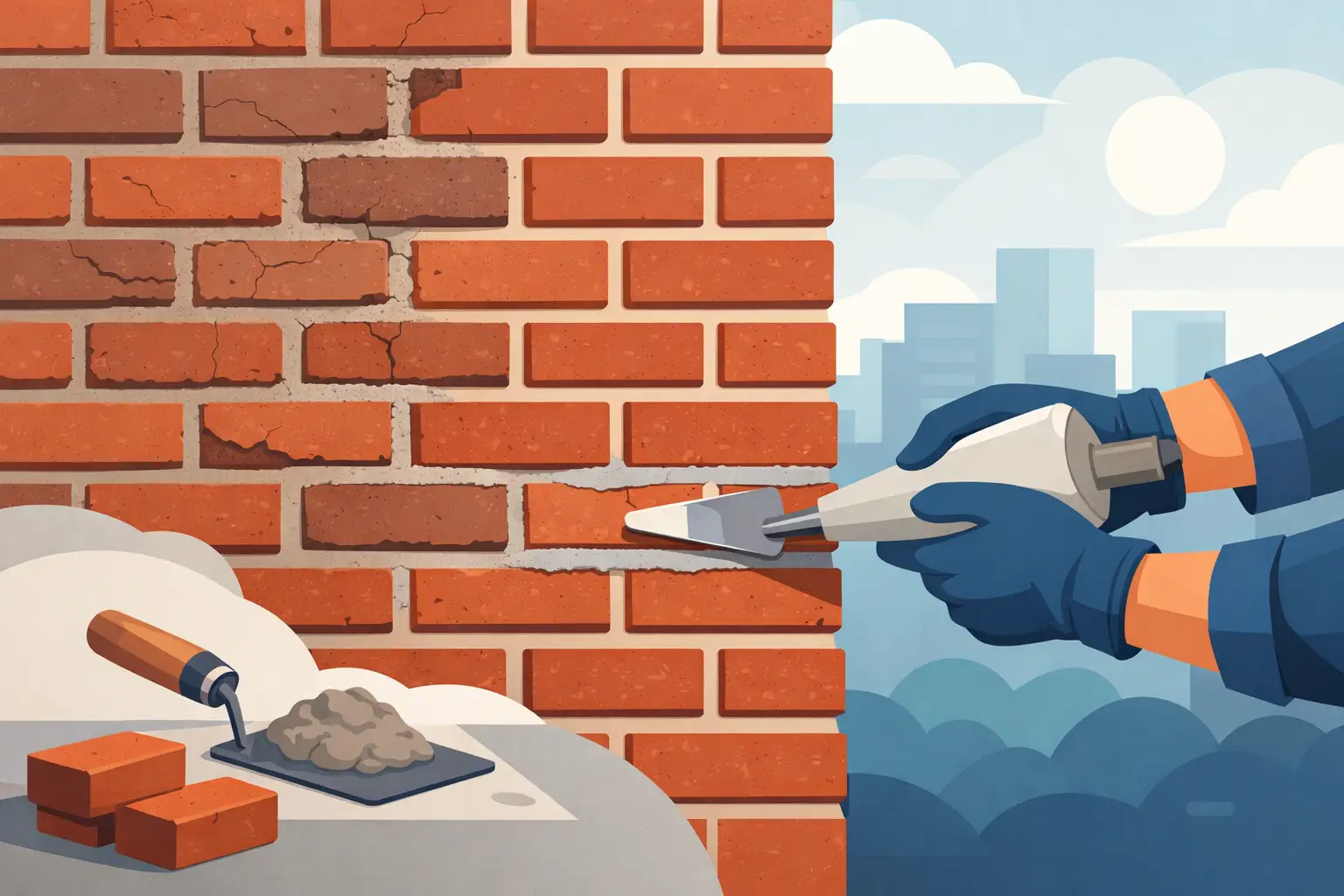
Tuckpointing Services for Lasting Brick Repair
A brick wall rarely fails all at once. More often, the warning signs start small - sandy mortar on the ground, hairline gaps between bricks, a chimney that looks a little rougher each winter. That is usually when tuckpointing services make the biggest difference. Catching mortar deterioration early can help protect the structure, preserve the appearance of the home, and prevent water from turning a manageable repair into a larger masonry problem.
For homeowners in Arlington Heights and the Northwest Suburbs, that timing matters. Illinois weather is hard on brick exteriors and chimneys. Repeated freeze-thaw cycles push moisture deeper into weakened mortar joints, and once that process starts, damage tends to spread. Sound mortar is what helps a brick wall or chimney perform the way it should.
What tuckpointing services actually do
Tuckpointing is the process of removing deteriorated mortar from between bricks and replacing it with new mortar that is matched as closely as possible in color, texture, and profile. The goal is not just to make the masonry look better, although appearance is part of it. The real purpose is to restore the integrity of the wall or chimney so it can resist water intrusion and hold up under seasonal expansion and contraction.
This is where experience matters. Mortar is not one-size-fits-all. If the new mortar is too hard, too soft, or simply incompatible with the original materials, the repair can create new stress on the brickwork. A proper tuckpointing job takes a measured approach: remove the failed mortar to the right depth, prepare the joints correctly, install the proper mortar mix, and finish the joints so the repair blends with the surrounding masonry.
On older homes especially, color matching can make the difference between a clean restoration and a patchy repair that stands out from the street. Homeowners usually want both performance and visual consistency. You should not have to choose between them.
Why mortar fails in the Northwest Suburbs
Brick is durable, but mortar is the sacrificial element in a masonry system. It is designed to age before the bricks do. That is why deteriorated joints are so common on chimneys, parapet walls, steps, and exterior facades throughout Schaumburg, Palatine, Mount Prospect, and nearby communities.
Moisture is the biggest driver. Mortar absorbs water, and during freezing weather that water expands. Over time, the constant freeze-thaw pattern causes cracking, separation, and erosion. Sun exposure, settling, and years of wind-driven rain can accelerate the process. Chimneys are especially vulnerable because they are exposed on all sides and take the full impact of winter weather.
Poor past repairs can also shorten the life of masonry. If someone smeared new mortar over damaged joints without removing the failed material first, the fix often breaks down quickly. If the mortar mix was wrong, the surrounding brick can start to suffer too. That is one reason specialized masonry repair is a better investment than a cosmetic patch.
Signs you may need tuckpointing services
Many homeowners first notice the issue visually. Mortar joints may look recessed, cracked, or uneven. In some cases, pieces of mortar begin falling out. In others, the warning signs appear indoors first, especially around chimneys and fireplaces where moisture finds its way through vulnerable masonry.
Common signs include crumbling joints, white staining on brick surfaces, loose bricks, visible gaps around a chimney, or water stains near the fireplace. If a chimney begins leaning, or if bricks themselves are cracking and spalling, the problem may have moved beyond simple repointing and into structural repair.
That is the trade-off homeowners should understand. Tuckpointing is highly effective when mortar failure is the main issue. But if the wall has shifted, the crown has failed, flashing is leaking, or bricks are already extensively damaged, a more comprehensive masonry restoration may be the right solution. A good inspection should sort out that difference before work begins.
Tuckpointing services and chimney protection
Chimneys deserve special attention because they combine masonry exposure with fire-safety concerns. When chimney mortar joints break down, water gets in faster, and deterioration tends to accelerate above the roofline. Left untreated, that can affect the flue liner, chimney crown, brick stability, and even adjacent roofing materials.
That is why tuckpointing on a chimney should never be viewed as a purely cosmetic upgrade. It is a protective repair. Restoring mortar joints helps stabilize the stack, reduce moisture intrusion, and support the safe function of the chimney system. If there are also signs of flue damage, creosote buildup, or fireplace drafting issues, it makes sense to have the full system evaluated by a qualified professional rather than treating each symptom separately.
For many homeowners, that combined expertise is valuable. Masonry repair and chimney safety often overlap, and the best long-term outcome usually comes from looking at the whole assembly instead of one isolated crack.
What a quality tuckpointing project should include
A proper repair starts with diagnosis, not guesswork. The contractor should identify whether the issue is isolated mortar wear, active water entry, settlement, or broader structural movement. That determines whether standard tuckpointing is enough or whether brick replacement, chimney rebuilding, or other corrective work should be part of the scope.
Once the repair plan is clear, the failed mortar should be ground or cut out carefully to an appropriate depth without damaging the surrounding brick. Dust and debris need to be removed so the new mortar can bond properly. The replacement mortar should be selected for compatibility with the existing masonry, not just convenience. Then the joints are packed, tooled, and finished to match the original appearance as closely as possible.
Weather also matters. In Illinois, timing and application conditions affect cure quality. Mortar should not be installed carelessly during extreme heat, freezing temperatures, or wet conditions that compromise the bond. Climate-conscious methods are part of durable workmanship, especially in a region where seasonal stress is unavoidable.
Why cheap masonry repairs often cost more later
Homeowners naturally compare estimates, and that is reasonable. But with tuckpointing, low pricing sometimes reflects shortcuts that are hard to spot until the repair starts failing. Shallow joint removal, poor mortar matching, rushed finishing, and surface-level patching can all make a project look complete without delivering lasting protection.
The problem is that moisture does not care what the invoice said. If water still has a path into the masonry, the damage continues. A repair that fails after one or two winters is not a bargain. It usually means paying again, and sometimes paying for additional brick replacement that could have been avoided with proper work the first time.
That is why warranty coverage and trade-specific experience matter. A contractor who understands masonry restoration, chimney exposure, and local weather patterns is in a better position to recommend the right repair and stand behind it. Liberty Fireplace & Masonry built its reputation around that kind of precision, including mortar color matching, local repair experience, and a 3-year Ironclad Labor Warranty that gives homeowners added confidence in the work.
When to schedule tuckpointing services
If you can see mortar deterioration, the best time to address it is usually before the next winter cycle gets involved. Spring through fall is often ideal for exterior masonry repairs, but the right schedule depends on weather conditions and the extent of the damage.
Do not wait for obvious water leaks to take the issue seriously. By the time moisture shows up inside, exterior masonry deterioration has often been developing for much longer. Early intervention is usually more straightforward, more affordable, and less disruptive than waiting until bricks loosen or a chimney starts shedding material.
For homes with older brickwork, periodic inspections are a smart way to stay ahead of larger problems. This is especially true for chimneys, upper masonry walls, and any area that gets repeated weather exposure. A small repair performed at the right time can extend the life of the whole system.
Brick homes have a lasting appeal because they are built to endure, but endurance still depends on maintenance. Mortar joints do not need attention every year, but when they start to fail, timely repair protects more than appearance. It protects the structure, the chimney, and the value of the home itself. If your brickwork is showing its age, the right tuckpointing work can restore confidence long before the damage becomes impossible to ignore.


Comments