
Why Is Mortar Crumbling Outside?
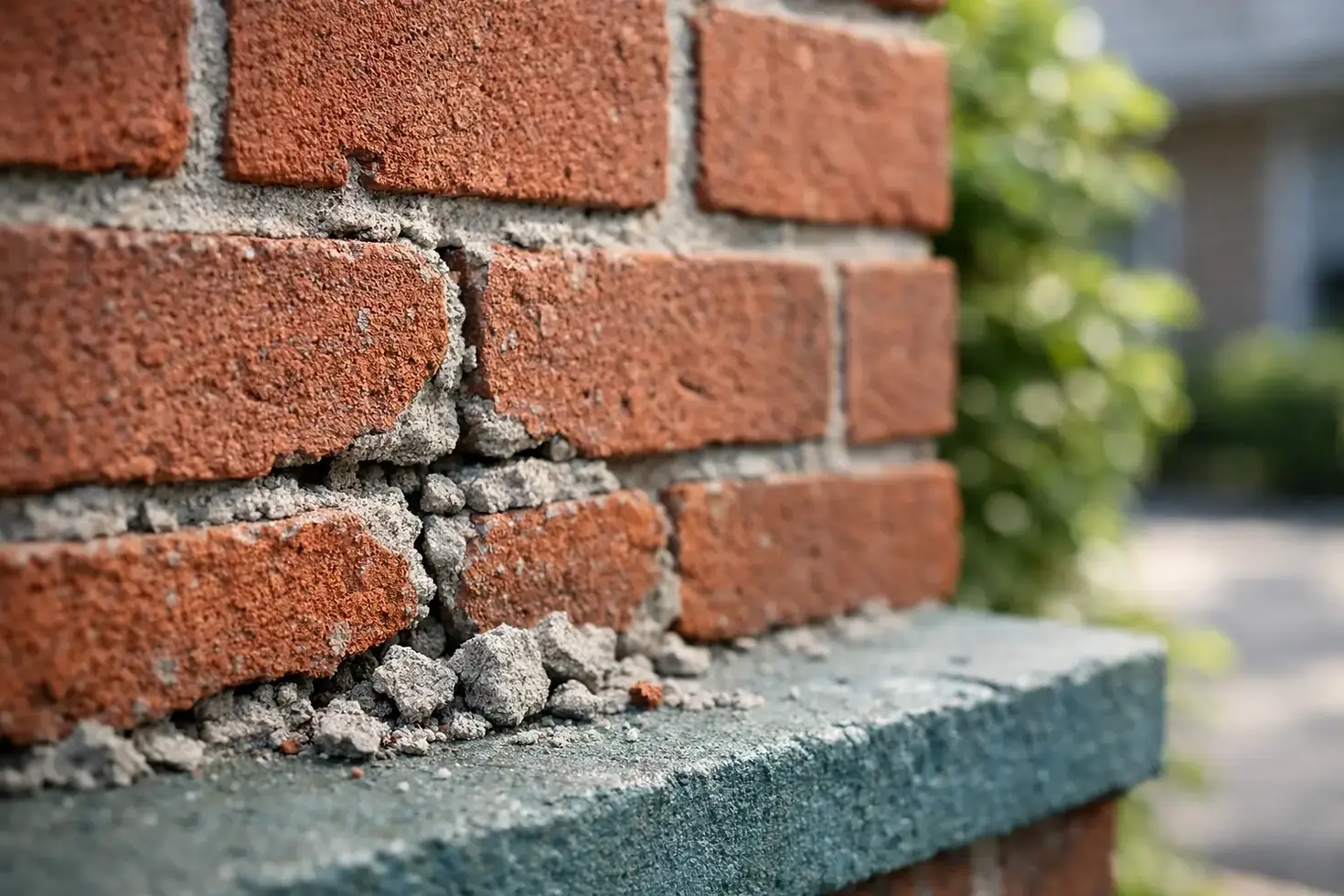
If you have started noticing sandy debris below your brick wall, gaps between bricks, or mortar joints that look cracked and hollow, it is fair to ask, why is mortar crumbling outside? In most cases, outdoor mortar does not fail for one single reason. It breaks down because age, moisture, weather exposure, and past repair quality all work together over time.
For homeowners in Arlington Heights and the Northwest Suburbs, that process often moves faster than expected. Illinois weather is especially hard on masonry. A wall or chimney may look solid from a distance, yet the mortar joints are quietly weakening with every season.
Why is mortar crumbling outside on brick homes and chimneys?
Mortar is designed to hold masonry units together, seal out water, and allow a structure to move slightly with temperature changes. It is durable, but it is also meant to be the more sacrificial part of the system. In other words, mortar should wear before the brick does. That is normal. The problem starts when that wear is ignored for too long.
The most common cause is water intrusion. Mortar is porous, so it absorbs moisture. When temperatures drop, that trapped water freezes and expands. As it thaws, the mortar contracts again. Repeated freeze-thaw cycling creates stress that slowly opens cracks, loosens the joint surface, and causes pieces to flake away.
Age also matters. Even well-installed mortar has a service life. Over the years, sun exposure, rain, snow, and wind gradually erode the binder that gives mortar its strength. Older homes often show this first in the most exposed areas, especially chimneys, parapet walls, and upper elevations that take the brunt of the weather.
Poor workmanship from an earlier repair can make the damage worse. If the wrong mortar mix was used, or if new mortar was applied over failing joints without proper preparation, the repair may not bond correctly. Mortar that is too hard for the brick can also create a mismatch, leading the surrounding masonry to crack or spall instead of flexing naturally.
The Illinois weather factor
In this region, exterior masonry deals with a demanding cycle of wet springs, hot summers, falling temperatures, ice, and snow. That constant movement is one reason crumbling mortar is so common outside.
A chimney is a good example. It stands above the roofline with no protection from the elements, and it gets wet from every direction. If the crown is cracked, the flashing is failing, or the cap is missing, more water gets into the masonry system. Once moisture enters and temperatures drop, deterioration accelerates.
Brick walls can have similar issues, though the source is sometimes subtler. Sprinkler overspray, clogged gutters, poor drainage, and downspouts discharging too close to the home can keep masonry wet longer than it should be. Mortar joints that stay damp tend to deteriorate much faster than joints that are allowed to dry properly.
What crumbling mortar usually looks like
Homeowners often expect major masonry damage to be dramatic, but mortar failure usually starts small. You may see fine cracks following the horizontal or vertical joints. You might notice powdery material collecting on a window ledge, patio, or driveway. Sometimes the joints look recessed, as if the mortar has worn back deeper than the face of the brick.
In more advanced cases, sections of mortar fall out completely. That leaves open gaps where water can enter more easily. Bricks may begin to loosen, shift slightly, or show edge damage. On chimneys, deteriorating mortar is often accompanied by leaning, water stains, or white mineral deposits called efflorescence.
If you can scrape mortar out with a key or screwdriver, that is usually a sign the joints are no longer doing their job. Sound mortar should feel firm and well bonded, not soft and sandy.
Why mortar sometimes fails faster than expected
Not all mortar ages at the same rate. Exposure level, original materials, and maintenance history all matter. A sheltered side wall may stay in decent shape for years longer than a chimney stack facing wind-driven rain.
The mortar mix itself is another factor. Older homes often need a different mortar composition than newer construction. If a repair contractor used a mix that was too strong, the masonry system can become unbalanced. Hard mortar does not always mean better mortar. In the wrong application, it can trap stress and moisture where they should not be.
There is also the issue of patch repairs. Spot-filling a few visible gaps may make the wall look better temporarily, but it does not solve underlying deterioration if surrounding joints are also weak. In those situations, a more thorough tuckpointing or masonry restoration approach is usually the more durable fix.
When crumbling mortar is more than cosmetic
Some mortar loss is an early maintenance issue. Some is a structural warning. The difference depends on location, severity, and how long the damage has been active.
If the problem is limited to a few shallow joints on a low garden wall, the risk may be modest. If it is happening on a chimney, around a firebox, near window lintels, or across a large exterior wall, the stakes are higher. Mortar is part of the system that keeps masonry locked together. When too much of it is lost, water gets in, bricks loosen, and the structure becomes less stable.
For chimneys, that also raises safety concerns. A damaged chimney can allow water into the flue system, contribute to liner problems, and create hazards around the roofline. That is one reason experienced masonry and chimney professionals look beyond the visible joint damage and inspect the full assembly.
Why is mortar crumbling outside even after a repair?
If mortar is crumbling again not long after it was repaired, that usually points to one of three issues: the original cause of moisture was never corrected, the repair method was incomplete, or the mortar mix was not appropriate for the structure.
For example, repointing a chimney without addressing a cracked crown or faulty flashing often leads to repeat failure. The joints may be new, but the water problem remains. The same logic applies to walls affected by poor drainage or masonry that was sealed improperly and can no longer release trapped moisture.
Preparation matters too. Loose mortar should be removed to the proper depth before new mortar is installed. The joints need to be cleaned, the mix needs to match the masonry, and the curing process needs to be handled correctly. Rushed repairs rarely last through several Illinois winters.
What the right repair usually involves
The correct solution depends on how far the deterioration has progressed. In many cases, professional tuckpointing is the right answer. That means removing damaged mortar joints and replacing them with new mortar that is properly matched in strength, texture, and color.
If bricks are cracked, spalling, or loose, those may need to be replaced as part of the repair. Chimneys may also require crown repair, flashing work, waterproofing, or partial rebuilding if the damage is extensive. A proper evaluation should identify not only what failed, but why it failed.
This is where specialized masonry experience matters. Exterior mortar repair is not just cosmetic detail work. It is about preserving weather resistance, structural integrity, and the original appearance of the home. Precision color matching also makes a difference, especially on visible front elevations where poor repair work stands out.
When to call for an inspection
If the mortar damage is limited but getting worse each season, now is the time to have it looked at. Waiting usually increases the repair scope. What starts as tuckpointing can turn into brick replacement or rebuilding once water has had enough time to work deeper into the structure.
You should be especially cautious if you notice stair-step cracking, loose bricks, a leaning chimney, interior moisture near a fireplace wall, or recurring debris on the roof or ground below masonry. Those are signs the issue may have moved beyond simple surface wear.
For homeowners in the Northwest Suburbs, it helps to work with a contractor who understands local freeze-thaw conditions, chimney safety requirements, and the difference between a short-term patch and a durable masonry repair. Liberty Fireplace & Masonry sees this pattern often on older brick homes where weather exposure and aging joints finally catch up at the same time.
Crumbling mortar is the kind of problem that rewards early action. When the repair is done correctly, the brickwork stays protected, the home keeps its character, and you avoid paying for damage that did not need to spread.


Comments