
8 Signs Your Chimney Liner Failed
You usually do not see a chimney liner problem from the yard. The warning signs show up in smaller ways - a smoky fireplace, odd odors, crumbling flue pieces, or stains that seem to come out of nowhere. If you are looking for signs your chimney liner failed, the biggest concern is not appearance. It is safety. A damaged liner can allow heat, smoke, moisture, and combustion gases to move where they should not, putting both your chimney structure and your home at risk.
For homeowners in Arlington Heights and the Northwest Suburbs, this issue often gets worse after years of freeze-thaw weather, normal fireplace use, and delayed maintenance. Chimneys here take a beating. When the liner starts to break down, the damage rarely stays contained to the inside of the flue for long.
Why the chimney liner matters
Your chimney liner does more than guide smoke outside. It helps protect the masonry around the flue from high temperatures, corrosive byproducts, and moisture. It also supports proper draft, which helps your fireplace or fuel-burning appliance vent safely and efficiently.
When the liner fails, the chimney can no longer perform the way it was designed to. In some cases, the problem shows up quickly. In others, the damage develops quietly over time until a safety inspection reveals cracked clay tiles, deteriorated mortar joints, or a liner that no longer fits the appliance it serves.
That is why liner problems should never be treated as a minor maintenance issue. They affect performance, fire safety, and the long-term condition of the chimney itself.
Signs your chimney liner failed
Some warning signs are obvious, while others can be mistaken for general fireplace wear. If you notice one or more of the issues below, it is worth having the system evaluated by a qualified chimney professional.
Smoke enters the room when you use the fireplace
A fireplace that pushes smoke back into the room is not always a liner issue, but it can be one. If the liner is cracked, broken, undersized, or blocked by fallen tile debris, the draft may be compromised. That can cause poor venting and make fires difficult to enjoy safely.
It depends on the full condition of the chimney. Sometimes draft trouble is related to cap design, creosote buildup, or air pressure in the house. But when smoking is paired with other symptoms, liner failure becomes much more likely.
You find pieces of tile or flue material in the firebox
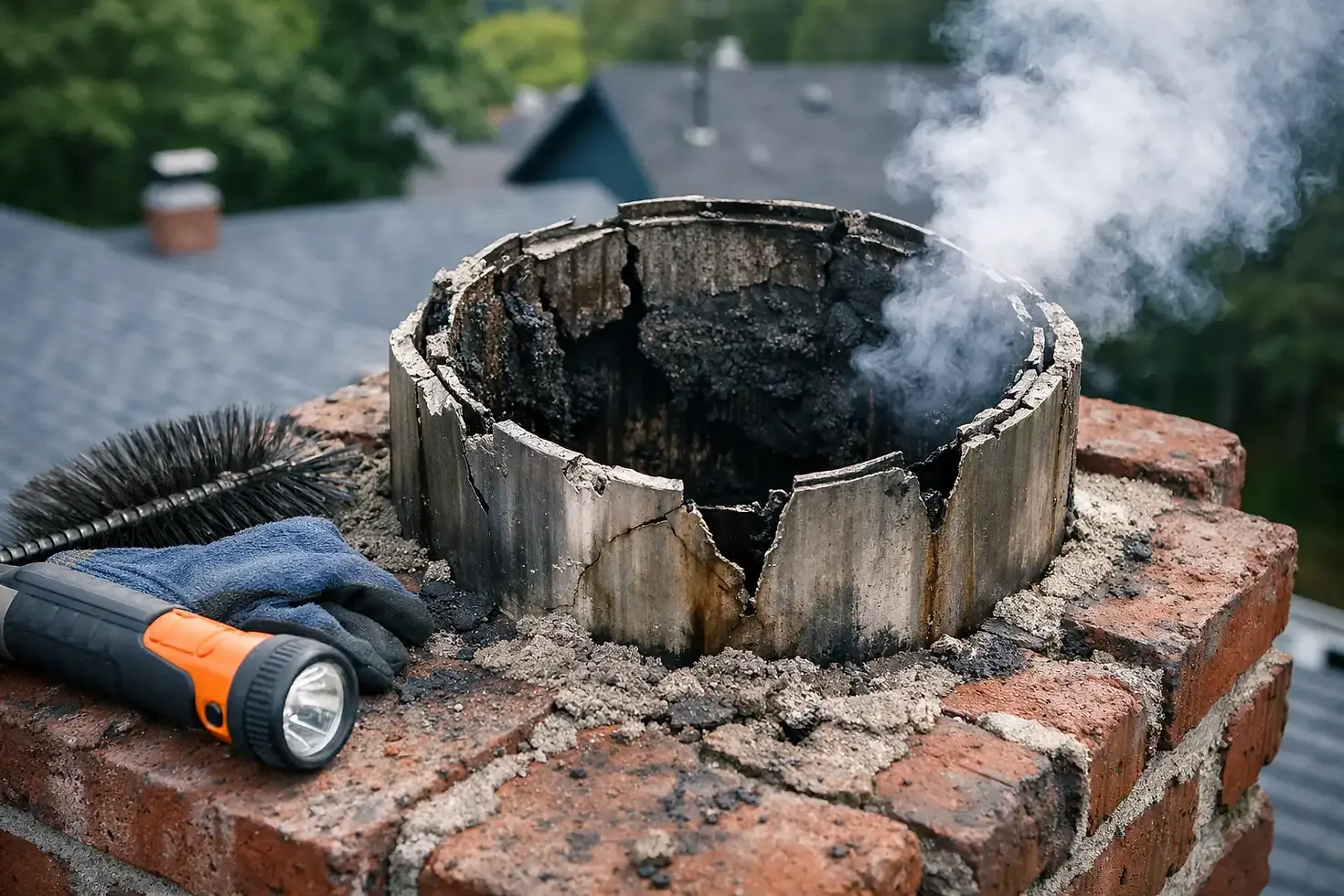
This is one of the clearest signs of internal liner damage. Clay tile liners can crack and break apart over time, especially in older chimneys exposed to moisture and repeated heating cycles. If fragments are dropping into the fireplace, the flue should be inspected before the system is used again.
Broken tile does not repair itself. Once pieces start separating, the liner may no longer provide continuous protection along the flue walls.
Strong odors come from the fireplace
A persistent smoky or sour smell from the fireplace can point to trapped creosote, moisture intrusion, or poor venting caused by liner deterioration. Damaged liners often allow moisture to interact with soot and combustion deposits, creating stronger odors that become especially noticeable in humid weather.
Illinois summers can make this worse. Even when the fireplace is not in use, a failed liner can contribute to musty or smoky smells inside the home.
The chimney shows interior or exterior moisture damage
Water is one of the most destructive forces in any masonry chimney. If your liner has failed, moisture can move more freely through the flue and into surrounding brick and mortar. You may notice staining on interior walls near the chimney, damp odors, spalling brick, or deteriorating mortar joints outside.
A liner problem is not always the only source of water damage. Crowns, flashing, caps, and masonry joints can also be involved. Still, liner failure often works together with those issues and accelerates the overall deterioration.
The fireplace burns poorly or the fire seems hard to maintain
If fires struggle to stay lit, burn unevenly, or produce excessive smoke, the venting system may not be functioning properly. A deteriorated liner can disrupt airflow and reduce draft performance. That means the fire may not get the steady pull it needs to burn cleanly.
This is especially common when an appliance has been changed but the liner was never updated to match it. Proper sizing matters. A liner that is damaged or improperly sized can create performance issues long before the homeowner knows what is happening inside the flue.
There are visible cracks in the flue during an inspection
Most chimney liner failures are confirmed during a professional inspection, often with camera equipment that reveals damage the homeowner cannot see from below. Cracks in clay flue tiles, missing mortar between liner sections, corrosion in metal liners, or gaps in the vent path are all serious findings.
This is one reason annual inspections are so valuable. Many liner failures do not produce dramatic symptoms right away, but they still create a fire and carbon monoxide hazard.
You notice excessive creosote or repeated blockages
A damaged liner can create rough, uneven surfaces that collect soot and creosote more easily. It may also allow debris from the liner itself to narrow the flue passage. If your chimney seems to need more frequent cleaning than expected, or if blockages keep returning, liner damage may be part of the reason.
Creosote is already a fire risk. When it builds up inside a compromised flue, the danger increases because heat can reach combustible areas more easily through cracks or gaps.
The chimney is older and has never had a liner evaluation
Age by itself does not prove failure, but it should raise the level of caution. Older chimneys, particularly those with original clay tile liners, are more likely to have hidden deterioration. Years of use, shifting, moisture, and temperature changes can all weaken the flue.
If the chimney serves a gas appliance now but once vented a different fuel source, the liner may also be mismatched to current use. That is a common issue in older homes throughout the Northwest Suburbs.
What causes chimney liner failure?
In many homes, liner damage is not caused by one event. It is the result of wear over time. Moisture is a major factor, especially in Illinois where freezing temperatures can expand small cracks and turn them into major defects. Chimney fires can also damage liners in a single incident, even if the event seemed minor to the homeowner.
Improper installation, age, corrosive flue gases, and neglected cleaning all contribute as well. Gas appliances can be particularly hard on certain liners because the exhaust creates acidic condensation. Wood-burning fireplaces bring their own issue: creosote accumulation and heat stress.
That is why a proper diagnosis matters. The right repair depends on what failed, how extensive the damage is, and what type of appliance the chimney serves.
What to do if you suspect a failed chimney liner
Stop using the fireplace or connected appliance until the chimney has been inspected. This is not an area where guesswork helps. A liner problem can affect fire safety and indoor air quality, and the visible symptoms do not always reflect the full extent of the damage.
A certified chimney inspection can determine whether the liner is cracked, missing sections, improperly sized, or deteriorated beyond repair. From there, the solution may involve relining the chimney, repairing related masonry damage, or correcting venting components that contributed to the failure in the first place.
For many homeowners, the best outcome comes from working with a contractor who understands both chimney safety and masonry restoration. That matters because liner failure often does not stay isolated inside the flue. It can affect the crown, brickwork, mortar joints, and overall structural condition of the chimney. At Liberty Fireplace & Masonry, that combined expertise is exactly what many local homeowners are looking for when they want the problem fixed correctly, not patched over.
Why early action saves money and stress
Waiting rarely makes a liner issue cheaper to fix. Small cracks can turn into widespread deterioration. Moisture problems can spread into the masonry shell. What starts as a venting defect can lead to interior staining, brick damage, or a chimney that needs more extensive restoration.
There is also the simple matter of peace of mind. If you use your fireplace in fall and winter, you should not have to wonder whether hidden flue damage is putting your home at risk. A sound liner supports safer operation, protects the chimney structure, and helps preserve the value of the home.
If you have noticed signs your chimney liner failed, trust that instinct and have it checked before the next fire. Catching the problem early is one of the smartest ways to protect both your chimney and the home around it.


Comments