
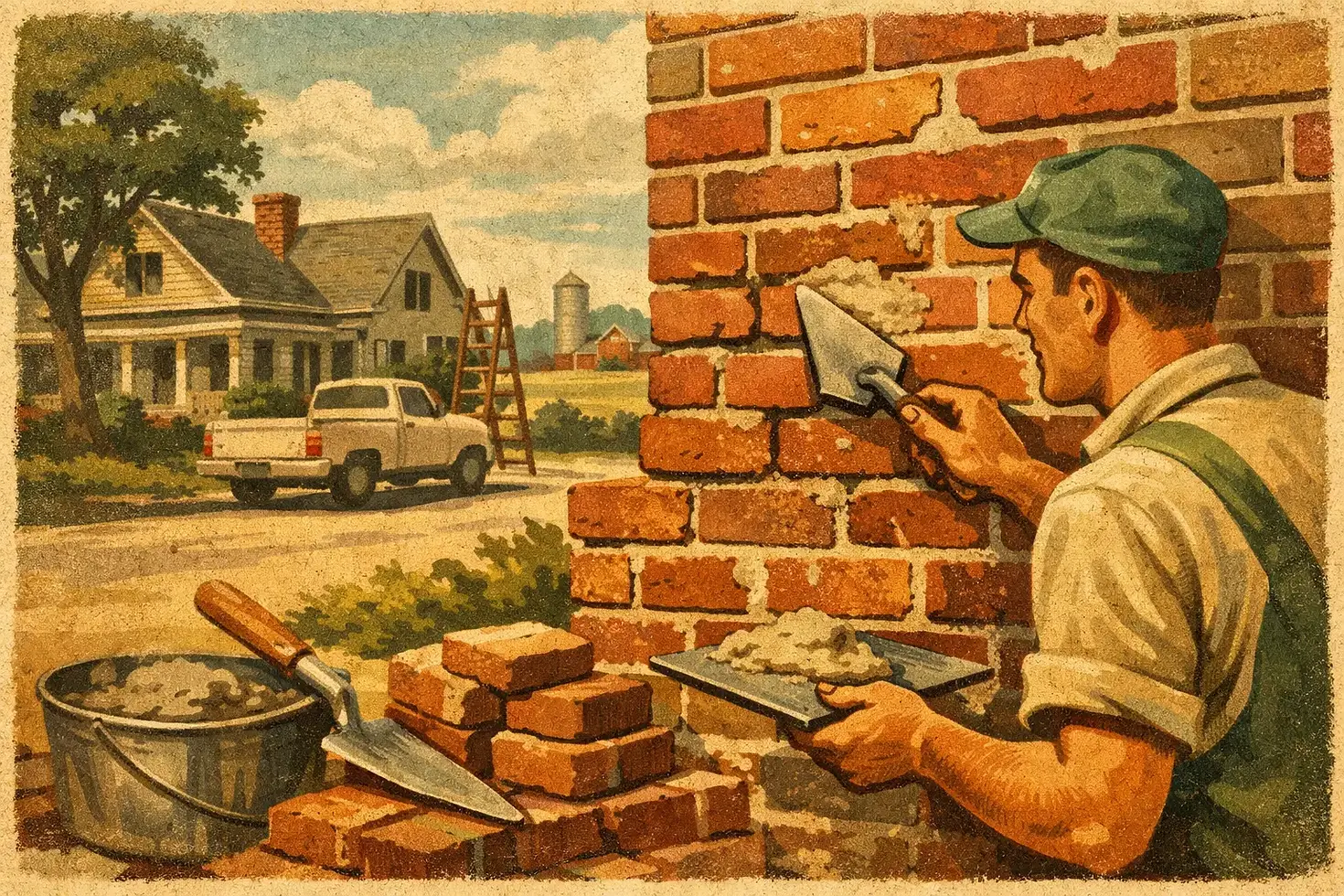
Brick Repair Guide for Illinois Homes
A cracked brick near the chimney or a patch of crumbling mortar along the front wall rarely starts as a major problem. In the Northwest Suburbs, it usually starts with moisture, a hard winter, and one weak spot that gets worse every season. That is why a solid brick repair guide matters for homeowners who want to protect both curb appeal and structural integrity before minor damage turns into widespread restoration.
What brick damage is really telling you
Brick is durable, but it is not maintenance-free. Most visible damage is not just about one failed brick. It is a sign that water has found a way in, the mortar has started to break down, or a section of masonry is moving under stress.
In Illinois, freeze-thaw cycles are often the main driver. Moisture enters hairline cracks or porous mortar joints, temperatures drop, and that trapped water expands. Over time, the pressure can cause mortar to crumble, brick faces to pop off, and chimney structures to weaken. If the damage is around a fireplace chimney, the safety concern grows because masonry failure can affect draft performance, liner protection, and overall stability.
Some problems are mostly cosmetic at first. Others point to deeper structural issues. The difference is not always obvious from the ground, which is why experienced inspection matters.
A brick repair guide to the most common warning signs
The first thing homeowners should watch for is deteriorating mortar. If the joints between bricks look recessed, sandy, cracked, or missing in spots, that usually means the wall or chimney is losing one of its main lines of defense against water.
Spalled brick is another common issue. This happens when the outer face of the brick flakes, chips, or breaks away. A few isolated spalled bricks can often be replaced, but widespread surface failure may signal ongoing moisture intrusion or the use of hard modern mortar against older brick, which can force the brick itself to absorb too much stress.
Cracks matter too, but context matters more. A small vertical crack in mortar may be repairable with targeted restoration. Stair-step cracking along a wall can suggest movement in the masonry system. Leaning chimneys, separated brick corners, and bulging sections should never be treated as routine cosmetic fixes.
White staining, known as efflorescence, is another clue. The residue itself is not usually the main problem. It tells you water is traveling through the masonry and leaving mineral deposits behind. The key issue is finding out where that moisture is entering and why it is not drying properly.
When a DIY repair works and when it does not
Homeowners often ask if they can handle small repairs on their own. Sometimes, yes. If you are dealing with a minor non-structural issue like a little surface debris or early-stage staining, basic cleaning and monitoring may be reasonable.
Actual masonry repair is different. Matching mortar composition, joint depth, tooling style, and brick color takes skill. If the repair is done with the wrong mortar, it may look off immediately and fail faster in the next winter cycle. Mortar that is too hard can also damage surrounding brick, especially in older homes where the masonry needs a more compatible mix.
Chimneys are an even clearer case for professional work. They are exposed on all sides, absorb more weather stress, and carry safety implications tied to venting and fire exposure. A chimney that needs tuckpointing, partial rebuilding, or brick replacement should be assessed by a qualified masonry specialist, especially if there is any sign of tilting, crown damage, or internal flue concerns.
The repair method depends on the cause
A good brick repair guide should never suggest one fix for every problem. The right repair depends on what failed first.
If the mortar is the issue and the brick is still sound, tuckpointing is often the best solution. This involves removing deteriorated mortar to the proper depth and installing new mortar that matches the existing masonry in color, texture, and performance. Done correctly, tuckpointing restores both appearance and weather resistance.
If individual bricks have cracked, spalled, or loosened, brick replacement may be needed. The damaged units are removed carefully so surrounding masonry stays intact. Then new brick is installed and blended as closely as possible with the original work. On visible elevations, color matching matters as much as the technical repair because patchy results can lower the home’s appearance even if the wall is structurally sound.
For chimneys or load-bearing walls, the repair may go beyond surface restoration. Rebuilding sections of masonry, correcting water entry at the crown or flashing, and addressing related fireplace or venting issues may all be part of a proper long-term fix. That is why the cheapest proposal is not always the best value. If the source of the damage is left in place, the repair is already on borrowed time.
Why Illinois weather changes the repair strategy
Not every masonry repair method performs well in the Chicago suburbs. Materials and workmanship have to account for freeze-thaw stress, wind-driven rain, snow exposure, and repeated moisture cycling.
That affects everything from mortar selection to scheduling. Repairs completed in unsuitable temperatures or with poor curing conditions may not bond correctly. Water repellents, when appropriate, need to be breathable. Sealing in moisture can do more harm than good. Chimney work also needs to consider how exposed upper masonry sections weather differently than lower wall surfaces.
This local climate is one reason homeowners benefit from working with a contractor who understands how brick homes and chimneys age in Arlington Heights, Palatine, Schaumburg, Buffalo Grove, and nearby communities. The problem is not just damaged brick. It is damaged brick in a climate that keeps testing every weak point.
How to evaluate a masonry contractor
If you need more than a very minor touch-up, the contractor you choose will determine how well the repair holds up. A dependable masonry company should explain what caused the damage, what repair is actually needed, and whether related chimney or water-management issues need attention at the same time.
Look for clear experience in tuckpointing, structural brick repair, and chimney restoration rather than general handyman services. Ask how mortar will be matched. Ask whether damaged brick will be replaced or skimmed over. Ask what warranty backs the labor. Those answers tell you a lot about the quality of the work you can expect.
For homes with fireplaces and chimneys, it also helps to work with a company that understands both masonry performance and chimney safety. Liberty Fireplace & Masonry is one example of that specialized approach, combining exterior brick repair with chimney expertise and a warranty-backed standard of workmanship that gives homeowners more confidence in the result.
What to expect during the repair process
Most professional brick repair starts with an inspection. The goal is to determine whether the issue is isolated or part of a broader pattern. That means checking mortar joints, brick condition, chimney exposure, nearby flashing, water entry points, and any visible movement in the structure.
From there, the repair plan should be specific. Homeowners should know what materials are being removed, how replacement mortar or brick will be matched, and whether adjacent areas need preventive work. Clean execution matters too. Masonry repair is detailed work, and careful staging helps protect landscaping, walkways, siding, and roofing near the work area.
The finished repair should not look like a rough patch. It should look integrated, stable, and consistent with the home. That is especially important on front-facing walls, entry columns, and chimneys that define the exterior appearance of the property.
The cost of waiting too long
One of the most expensive choices in masonry is delay. A small area of failed mortar can allow water into a much larger section of wall. A few spalled bricks on a chimney can turn into partial reconstruction if moisture keeps reaching the interior. What starts as a repair can become a restoration project when surrounding materials begin to fail.
There is also the issue of safety. Loose chimney brick, unstable masonry, and neglected fireplace structures are not just visual concerns. They can create real risks for the home and the people inside it.
The right time to act is usually earlier than homeowners think. If damage is visible now, the underlying wear has likely been developing for some time. Getting it assessed before another winter is often the smartest move.
A well-timed repair protects more than the brick itself. It protects the look of your home, the strength of the structure, and your confidence that the work was done to last.


Comments