
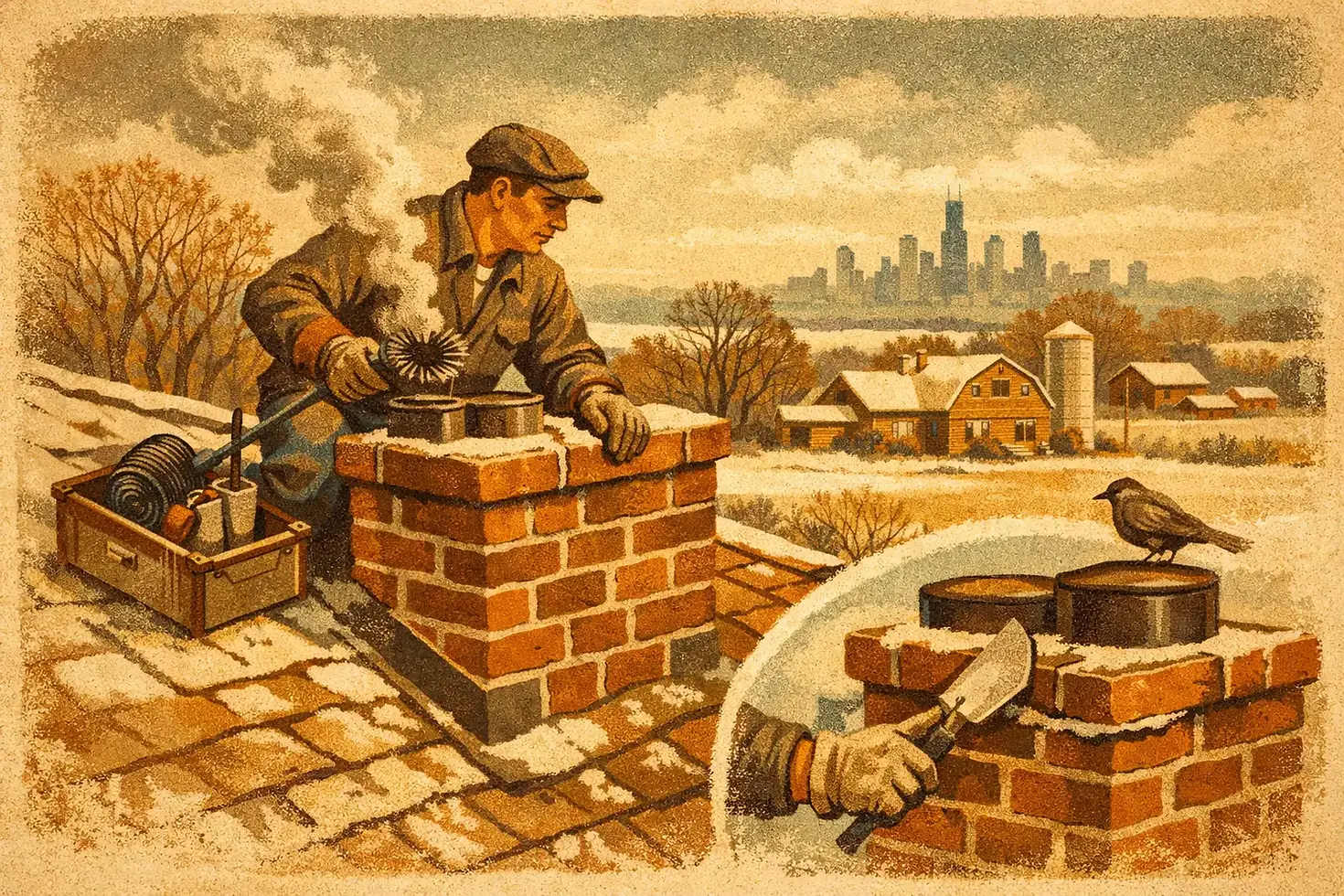
Chimney Maintenance Guide for Illinois Homes
A small crack in mortar or a little flaking brick near the roofline may not look urgent from the driveway. After one Illinois winter, that minor wear can turn into water intrusion, loose masonry, chimney leaks, or a safety issue inside the flue. That is why a solid chimney maintenance guide matters for homeowners in Arlington Heights and the Northwest Suburbs, where freeze-thaw cycles are hard on brick, mortar, caps, and crowns.
Chimneys do not fail all at once. In most cases, they wear down in predictable ways. Moisture gets into aging mortar joints, temperatures swing, materials expand and contract, and small defects become expensive repairs. When maintenance is handled early, the chimney lasts longer, performs more safely, and preserves the look of the home.
Why chimney maintenance matters more in Illinois
A chimney in the Chicago suburbs faces a rough combination of weather and use. Snow, ice, wind-driven rain, humidity, and repeated freezing temperatures all put stress on masonry. Even a well-built chimney will need periodic attention because mortar joints are designed to age before the brick does.
That trade-off is a good thing when it is managed properly. Repointing or tuckpointing worn joints is far more practical than waiting until brick becomes loose or sections of the chimney begin to lean or deteriorate. The same applies to crowns, flashing, and chimney caps. These components are there to keep water out, and once they start failing, the damage rarely stays isolated.
Inside the system, fireplaces and flues have their own maintenance needs. Wood-burning fireplaces create creosote, and creosote buildup increases fire risk. Gas fireplaces burn cleaner, but they still need inspection because venting issues, liner damage, and water entry can go unnoticed for a long time.
A practical chimney maintenance guide for homeowners
The most effective approach is simple: inspect regularly, clean when needed, and repair small defects before they spread. Homeowners do not need to become chimney technicians, but they should know what to watch for and when to call a specialist.
Start with a yearly chimney inspection
For most homes, an annual inspection is the baseline. This is especially true if the fireplace is used during fall and winter, or if the chimney is older and exposed to years of weathering. A proper inspection looks at both the visible masonry exterior and the internal venting components that homeowners cannot safely assess from the ground.
A certified inspection can identify cracked flue liners, deteriorated crowns, damaged caps, failing flashing, spalling brick, and gaps in mortar joints. It can also catch performance issues, like drafting problems or early signs of water intrusion. In many cases, a yearly inspection costs far less than repairing damage that was left to progress for another season.
Clean the flue based on use, not guesswork
Chimney cleaning is not the same for every household. A fireplace used a few times each year will not accumulate debris at the same rate as one used every week. Wood species, burning habits, and venting performance all affect creosote buildup.
That said, waiting until there is a visible problem is not a sound plan. If you burn wood regularly, cleaning should be scheduled as recommended after inspection rather than delayed until odors, smoke issues, or heavy deposits appear. Gas units may need less cleaning, but they still need service and safety checks.
Watch for water first
If there is one theme in any chimney maintenance guide, it is this: water causes most masonry damage. Chimneys are constantly exposed, and once moisture enters the system, it can affect both exterior masonry and interior building materials.
Warning signs include white staining on brick, rust on the damper or firebox components, musty odors, bubbling paint or staining near the chimney, and bits of flue tile or masonry in the fireplace. Sometimes the clue is outside, like cracked mortar or a missing chimney cap. Sometimes it shows up inside first.
The source matters. A leak could be coming through the crown, around flashing, through open mortar joints, or from porous masonry that needs proper sealing. The correct repair depends on where the water is getting in. Surface fixes do not last if the true entry point is missed.
What homeowners should check between professional visits
You should not climb onto the roof or attempt internal flue repairs yourself, but there are a few safe observations that can help you catch issues early.
From the ground, look at whether the chimney appears straight and stable. Check for missing mortar, cracked or chipped brick, staining, vegetation growth, or a cap that looks damaged or absent. After a heavy rain, note whether there are damp spots near the fireplace or chimney wall indoors.
Inside, pay attention to odors, smoke backing into the room, crumbling material in the firebox, or signs of moisture. If something has changed since the last heating season, it is worth having the system evaluated. Chimneys often give warning signs before they become a larger hazard.
Common chimney repairs and why timing matters
Not every chimney problem requires a rebuild. In fact, many issues can be addressed efficiently when they are caught early.
Tuckpointing and mortar repair
Mortar joints naturally wear over time, especially in older brick chimneys. When mortar becomes recessed, cracked, or loose, water enters more easily. Tuckpointing restores those joints and helps maintain structural integrity while preserving the appearance of the chimney.
Color matching matters here. Poorly matched mortar can make a repair stand out in the wrong way, especially on prominent front-facing chimneys. Good masonry work should protect the structure and respect the look of the home.
Crown and cap repairs
The chimney crown is the top cement surface that sheds water away from the flue opening and masonry below. If it is cracked, water can move into the chimney body and accelerate damage. A chimney cap adds another layer of protection by keeping out rain, animals, and debris.
Homeowners sometimes underestimate these parts because they are less visible than brickwork. In practice, they are among the most important defenses against moisture-related deterioration.
Flashing repair
Flashing seals the joint where the chimney meets the roof. If flashing fails, leaks can show up in ceilings, attics, or walls near the chimney chase. This problem is often mistaken for a roofing issue alone, but chimney flashing requires careful coordination between roofing and masonry conditions.
Partial rebuilds and structural repair
When damage is advanced, sections of the chimney may need rebuilding. This is often the case when bricks have spalled repeatedly, mortar loss is widespread, or the top courses have become unstable. While a rebuild is a larger investment, it is sometimes the safest and most cost-effective path if the upper chimney has passed the point of patchwork repair.
Seasonal timing makes a difference
The best time to schedule chimney maintenance is before peak burning season. Late summer and early fall are ideal because inspection, cleaning, and repairs can be completed before the fireplace is in regular use.
Spring also makes sense, especially if winter revealed leaks or visible masonry wear. Waiting until the first cold week of the year can limit scheduling options and increase the chance that needed repairs will interrupt fireplace use.
There is also a practical weather factor. Masonry materials and repair methods perform best when applied in suitable conditions. In northern Illinois, timing work around temperature and moisture conditions helps produce stronger, longer-lasting results.
When to call a specialist right away
Some situations should not wait for a routine appointment. If you see a leaning chimney, loose bricks, heavy interior staining, strong smoke odors, animals in the flue, or smoke entering the living space, schedule service promptly. The same is true if pieces of tile or masonry are falling into the firebox.
A handyman may offer a quick patch, but chimneys combine fire safety, venting, water management, and structural masonry. That is specialized work. A contractor with certified chimney knowledge and masonry repair experience can diagnose the full problem, not just the most visible symptom.
For homeowners in Arlington Heights, Palatine, Schaumburg, Buffalo Grove, Mount Prospect, Barrington, Hoffman Estates, Rolling Meadows, and nearby communities, local experience matters too. Illinois weather creates very specific wear patterns, and repair methods should reflect that. Liberty Fireplace & Masonry approaches maintenance with that long-view mindset: protect the home, preserve the masonry, and address problems correctly before they become larger ones.
A well-maintained chimney should not demand constant attention, but it should never be ignored. A yearly inspection, timely cleaning, and early masonry repair can prevent bigger structural and safety issues. If your chimney has not been checked in the past year, that is a smart place to start.


Comments