
Chimney Safety Inspection Trends Homeowners Should Know
A chimney can look solid from the driveway and still have a failing flue liner, hidden creosote, or moisture-damaged mortar behind the visible brick. That is why chimney safety inspection trends are moving beyond a quick visual check. For homeowners in Arlington Heights and the Northwest Suburbs, a thorough inspection increasingly means looking at fire safety, venting performance, masonry condition, and the effect of Illinois weather as one connected system.
The change is practical. Homes are aging, fireplaces are being used differently, and freeze-thaw cycles continue to punish exposed brick and mortar. A chimney inspection is no longer just an appointment to schedule after a problem appears. It is a way to identify smaller concerns before they become a chimney fire risk, a carbon monoxide concern, or an expensive rebuilding project.
Chimney Safety Inspection Trends Are More Thorough
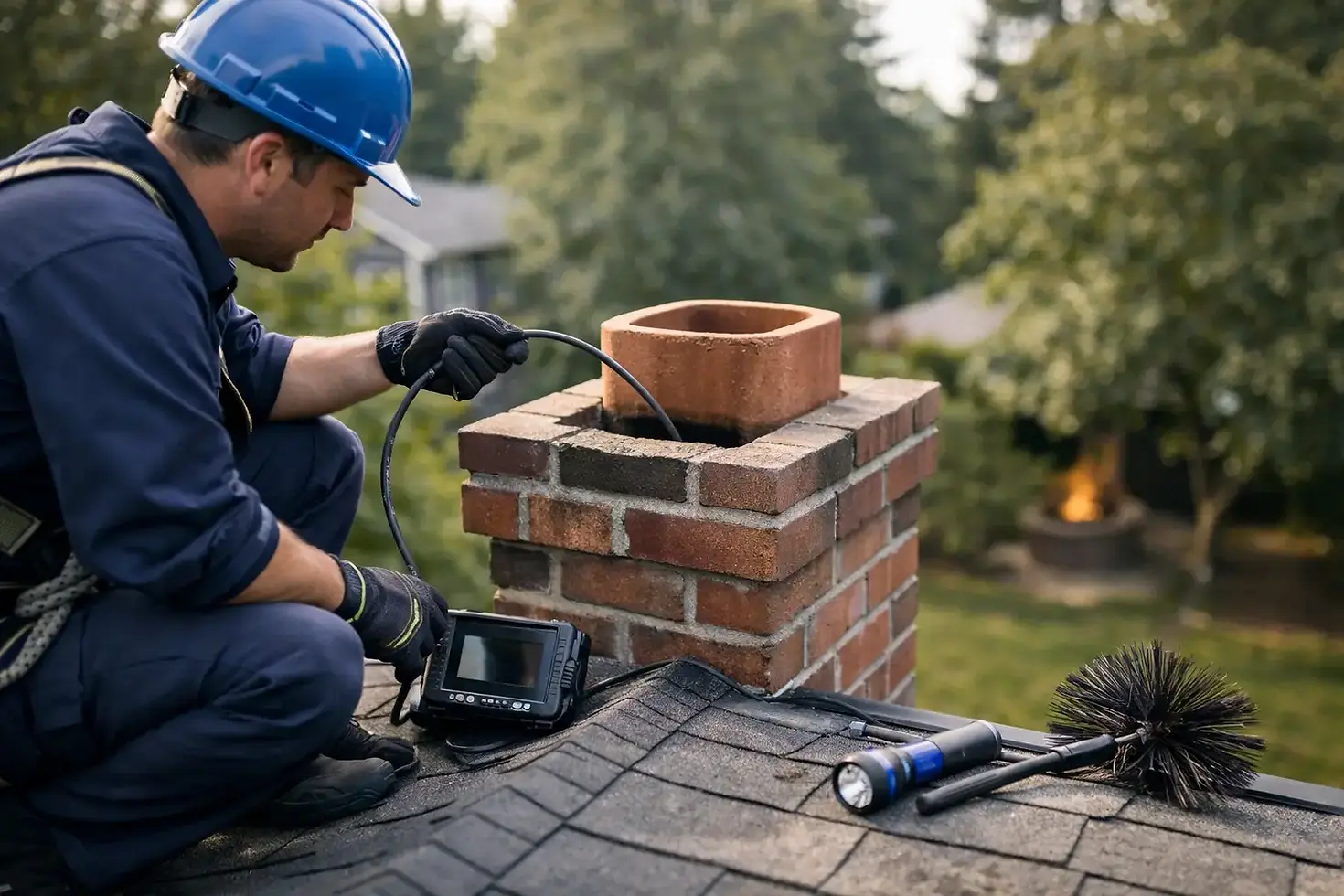
One of the most meaningful shifts is the growing use of inspection methods that can see farther than the technician can safely see from the firebox or roofline. Internal camera equipment allows a certified professional to examine portions of the flue that are not visible during a basic visual review. This can reveal cracked or separated flue tiles, damaged liners, displaced joints, obstructions, and creosote deposits that may otherwise go unnoticed.
That does not mean every chimney needs the same level of inspection every year. The right scope depends on how the fireplace is used, the age and condition of the chimney, whether there has been a chimney fire or water event, and whether the property has changed hands. Still, homeowners are increasingly choosing a closer look when a chimney has not been inspected for several seasons or when there are signs of deterioration.
A detailed inspection also provides a clearer record of what is happening inside the system. Instead of relying on guesswork, a homeowner can understand whether a recommendation involves routine maintenance, a targeted repair, or a more significant safety concern.
Masonry and Flue Safety Are Being Evaluated Together
A chimney is both a venting system and an exterior masonry structure. Treating those as separate issues can miss the source of a problem. A cracked crown, open mortar joint, deteriorated flashing, or missing chimney cap can allow water into the masonry. Once moisture enters, freeze-thaw cycles can loosen brick faces, weaken mortar, and contribute to damage around the flue.
For homes in the Chicago area, this connection matters. Water absorbed by masonry expands when it freezes. Over repeated winters, even small defects can become spalling brick, crumbling joints, leaning sections, or gaps that let more water enter. Those conditions may affect the chimney's stability as well as the integrity of the flue system.
Current chimney safety inspection practices place more attention on the exterior shell, including the crown, cap, flashing, brickwork, mortar joints, and visible signs of moisture movement. A good inspection should not simply identify a stain or crack. It should help determine why it developed and what repair will prevent it from returning.
Color-Matched Repairs Protect More Than Curb Appeal
When masonry repairs are needed, matching the mortar color and profile to the existing home is not merely cosmetic. Properly selected mortar also needs to perform appropriately with the surrounding brick. Mortar that is too hard, too soft, or poorly installed can accelerate damage rather than solve it.
This is especially relevant on older brick homes throughout Palatine, Mount Prospect, Barrington, and nearby communities, where original masonry may have its own color, texture, and movement characteristics. Precise tuckpointing and compatible repair methods preserve the appearance of the home while helping the chimney manage seasonal weather exposure.
Venting Concerns Extend Beyond Wood Fireplaces
Many homeowners associate chimney inspections only with wood-burning fireplaces, but venting safety is broader than that. Gas fireplaces, gas logs, furnaces, water heaters, and inserts can all have venting requirements that deserve professional attention. A clean-looking fireplace does not guarantee that combustion gases are exhausting properly.
Changes to the house can also affect performance. New windows, added insulation, kitchen exhaust equipment, bathroom fans, and remodeled basements may alter how air moves through the home. In certain situations, those changes can contribute to draft issues or make an existing venting weakness more noticeable.
The goal is not to assume that every home has a dangerous condition. It is to evaluate the appliance, vent path, and chimney configuration based on what is actually installed. When a qualified inspector finds a concern, the recommended remedy should match the cause, whether that involves cleaning, repair, relining, cap replacement, or a referral for appliance service.
Homeowners Are Scheduling Before Problems Become Visible
Another clear trend is timing. More homeowners are scheduling chimney inspections before the first cold stretch rather than waiting until they smell smoke, see falling mortar, or have trouble starting a fire. Early scheduling gives time to complete cleaning or repairs before the fireplace becomes part of the household routine.
An annual inspection is generally a sensible baseline for chimneys and fireplaces, particularly for wood-burning systems. However, frequency can depend on use. A fireplace used several times each week through winter may need more attention than one used only occasionally. A chimney that has experienced storm damage, a suspected flue issue, animal activity, or visible masonry deterioration should be evaluated sooner rather than placed on a routine calendar.
Homeowners should also be cautious about assuming that infrequent use eliminates risk. Birds, squirrels, nesting material, moisture intrusion, and gradual masonry failure can affect a chimney even when the fireplace is rarely used. A system that sits unused for years may need a careful review before it is put back into service.
Documentation Is Becoming Part of Home Maintenance
Detailed findings, photographs, and clear repair priorities are becoming more valuable to homeowners. They support better decisions now and create useful maintenance records for the future. If a chimney is inspected each year, documentation can show whether a minor crack is stable, whether mortar wear is progressing, or whether a repair has addressed the original issue.
This is particularly helpful for homeowners preparing to sell, buying an older property, or planning exterior restoration work. A chimney can be a major visual feature of a brick home, and unresolved defects can raise questions during a real estate transaction. Addressing safety and structural issues early is usually less disruptive than reacting to a last-minute finding.
Documentation also helps separate urgent needs from maintenance that can be planned. Not every crack requires an immediate rebuild. On the other hand, a compromised flue, loose chimney section, active water penetration, or heavy creosote accumulation should not be postponed simply because the exterior still appears acceptable.
What a Safety-Focused Inspection Should Address
The strongest inspections combine close observation with practical judgment. A certified chimney professional should consider the fireplace or appliance connection, the accessible portions of the flue, creosote or obstruction concerns, draft indicators, the chimney cap and crown, flashing, brick and mortar condition, and signs of water intrusion.
Homeowners should expect straightforward explanations, not vague warnings. If repairs are recommended, ask what condition was found, what could happen if it is left unaddressed, and whether the work is needed for immediate safety or long-term preservation. A dependable contractor should be able to explain the difference clearly.
It also pays to ask who will perform the work. Chimney safety and masonry restoration require related but distinct skills. A provider with both chimney expertise and masonry craftsmanship can evaluate how a flue concern, deteriorated mortar, crown failure, and water damage may be connected rather than treating each symptom in isolation.
Choosing Repair Decisions That Hold Up in Illinois
The latest equipment and inspection tools are useful, but the repair recommendation still matters most. A low-cost patch may look acceptable for a season and fail after another cycle of snow, rain, and freezing temperatures. Durable chimney work requires proper preparation, compatible materials, sound flashing details, and attention to how water leaves the structure.
Liberty Fireplace & Masonry approaches chimney concerns with that full-picture perspective, pairing certified chimney safety knowledge with restoration work designed for local weather conditions. When appropriate repairs are backed by a clear labor warranty, homeowners have greater confidence that the work is intended to last rather than simply cover a visible defect.
If your fireplace has been unused for a while, your chimney shows cracking or staining, or you are preparing for the heating season, schedule an inspection before the first fire. A clear assessment now can protect your home, preserve its masonry, and let you use your fireplace with greater peace of mind.


Comments